


Introduction: Why B2B Lead Generation Is Changing in 2026
Generating high-quality B2B leads has become increasingly challenging. Businesses are no longer competing solely on the number of prospects they can reach. They are competing on how effectively they identify the right decision-makers, understand their business challenges, and build meaningful relationships that turn prospects into customers.
Traditional lead generation methods, such as generic cold emails, broad prospect lists, and mass outreach campaigns, are becoming less effective when they lack relevance and personalization. Today’s buyers expect businesses to understand their needs, industry, and specific challenges before initiating a sales conversation.
At the same time, artificial intelligence (AI), data enrichment, marketing automation, and personalized outreach are changing how B2B companies approach customer acquisition.
In 2026, successful B2B lead generation is increasingly about combining accurate prospect data, intelligent targeting, personalized communication, and consistent follow-up strategies.
For businesses looking to build a predictable sales pipeline, understanding these changes is essential. In this article, we explore how AI and personalization are transforming B2B lead generation and how businesses can use modern strategies to generate qualified leads and create more sales opportunities.
1. The Biggest Challenges in Modern B2B Lead Generation
Despite having access to more marketing platforms and sales technologies than ever before, many B2B businesses continue to struggle with generating consistent sales opportunities.
Some of the most common challenges include:
Finding the Right Target Audience
Reaching thousands of companies does not necessarily translate into meaningful business opportunities. Many campaigns fail because they target organizations that do not match the company’s ideal customer profile (ICP).
Businesses need to identify prospects based on relevant factors such as:
- Industry and business category.
- Company size and annual revenue.
- Geographic location and target markets.
- Business model and services offered.
- Technology usage and operational requirements.
- Decision-makers and purchasing responsibilities.
A well-defined target audience helps sales teams focus their efforts on businesses that are more likely to benefit from their products or services.
Inaccurate or Outdated Prospect Data
Poor-quality contact information can significantly affect outreach performance.
Incorrect email addresses, outdated job titles, duplicate contacts, and incomplete company information can waste valuable sales resources.
Businesses should prioritize database verification, contact enrichment, and regular data maintenance to improve the accuracy of their prospect lists.
Generic Outreach and Low Engagement
Sending the same message to hundreds of prospects without considering their business needs often results in low engagement.
Decision-makers receive numerous sales messages every day. A generic pitch that does not address their challenges gives them little reason to respond.
The solution is to make outreach more relevant by connecting the message to the prospect’s industry, business priorities, or potential areas of improvement.
Difficulty Converting Leads into Meetings
Generating a prospect’s interest is only one part of the sales process.
Businesses also need a structured approach to nurturing prospects, handling responses, following up appropriately, and converting interest into qualified sales conversations.
Without a consistent process, potentially valuable opportunities can be missed.
2. How Artificial Intelligence Is Transforming B2B Prospecting
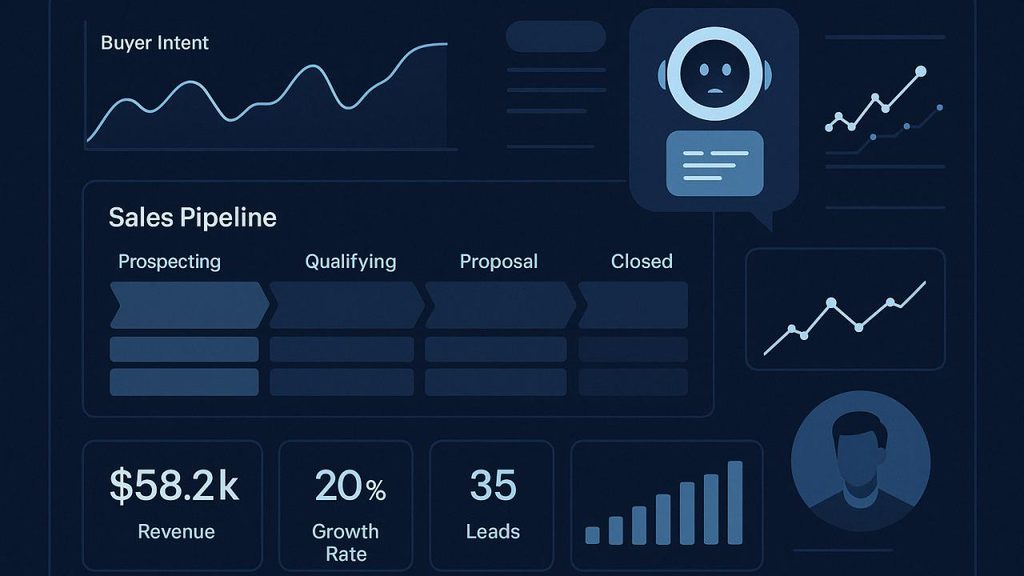
Artificial intelligence is becoming an important part of modern B2B sales and marketing operations.
Rather than replacing sales professionals, AI can help them research accounts, identify relevant opportunities, improve communication, and reduce repetitive administrative work.
According to McKinsey’s 2026 B2B research, organizations that integrate AI into their commercial workflows are increasingly using it to improve seller efficiency and customer experiences.
Here are some practical applications of AI in B2B lead generation.
AI-Powered Prospect Research
AI tools can help businesses analyze company information, industry developments, hiring activity, technology adoption, and other relevant business signals.
For example, a software company targeting manufacturing businesses could use research tools to identify companies that are:
- Expanding their manufacturing operations.
- Hiring additional production or operations employees.
- Opening new facilities.
- Investing in digital transformation.
- Experiencing operational challenges that its software can address.
These insights can help sales teams prioritize accounts with stronger potential business relevance.
Automated Lead Qualification
Not every prospect is a suitable customer.
AI-assisted lead qualification can help evaluate prospects against predefined criteria, including company size, industry, location, job title, and other ICP requirements.
Businesses can use these insights to prioritize prospects and allocate sales resources more effectively.
However, automated scoring should be reviewed against actual business requirements. A high score does not automatically mean a prospect has buying intent.
AI-Assisted Sales Personalization
AI can help sales teams research prospects and develop relevant communication based on company information and business context.
For example, instead of sending a generic message such as:
“We help businesses improve their operations. Would you be interested in learning more?”
A more relevant message might reference a company’s recent expansion, industry-specific requirements, or operational priorities.
The objective is not simply to automate more messages. It is to make each interaction more meaningful.
Improving Sales Productivity
AI can also assist with:
- Summarizing prospect research.
- Drafting personalized outreach messages.
- Organizing lead information.
- Identifying follow-up opportunities.
- Analyzing campaign performance.
- Supporting sales reporting and forecasting.
By reducing repetitive tasks, AI allows sales professionals to spend more time engaging with prospects and developing relationships.
3. Why Personalization Matters More Than Ever in B2B Sales

Modern B2B personalization requires an understanding of the prospect’s business, industry, responsibilities, and potential challenges.
Personalization has evolved beyond including someone’s first name or company name in an email.
McKinsey’s 2026 Global B2B Pulse Survey highlights the growing importance of hyperpersonalization. Its research found that market leaders were four times more likely than their peers to deploy true one-to-one personalization.
This demonstrates why businesses should move beyond basic personalization and focus on creating relevant buying experiences.
Personalize Based on Industry
Different industries face different operational and commercial challenges.
For example:
- Manufacturing companies may prioritize production efficiency, inventory management, and operational costs.
- Technology companies may focus on customer acquisition, product adoption, and market expansion.
- Professional service firms may prioritize client acquisition, relationship development, and recurring revenue.
Understanding these differences helps businesses create more relevant sales messages.
Personalize Based on Job Roles
A CEO, marketing director, and operations manager may have completely different priorities, even within the same organization.
Consider a company offering business process automation software:
- A CEO may be interested in profitability and business growth.
- An operations manager may focus on efficiency and reducing manual processes.
- An IT director may prioritize system integration, security, and scalability.
Personalizing communication around the recipient’s responsibilities makes the message more relevant.
Use Business Signals to Make Outreach Relevant
Businesses should also pay attention to meaningful changes within their target accounts.
Examples include:
- Recent funding announcements.
- Business expansion.
- New leadership appointments.
- Product or service launches.
- Hiring activity.
- Technology investments.
These signals can provide useful context for starting a conversation, provided the information is accurate and the outreach is relevant.
4. The Role of Cold Email in Modern B2B Outreach
Despite the emergence of new marketing channels, email remains an important communication channel for B2B businesses.
However, successful cold email campaigns require more than sending large volumes of messages.
They require proper audience targeting, relevant messaging, accurate contact information, and responsible sending practices.
Build a Targeted Prospect Database
The foundation of a successful cold email campaign is a well-researched prospect database.
Businesses should define their ideal customer profile before building their contact lists.
A useful prospect database should include:
- Company name.
- Company website.
- Industry.
- Employee count.
- Contact first and last name.
- Job title.
- Verified business email address.
- LinkedIn profile, where relevant.
Having accurate and organized prospect information makes it easier to create targeted outreach campaigns.
Write Personalized Email Messages
A good B2B cold email should be short, relevant, and easy to understand.
Rather than focusing entirely on product features, businesses should communicate how their solution may address a particular business challenge.
An effective cold email typically includes:
- A relevant opening.
- A business-specific observation or challenge.
- A concise explanation of the potential value.
- A simple call to action.
Avoid exaggerated claims, misleading subject lines, and generic sales pitches.
Focus on Deliverability and Responsible Sending
Even a well-written email cannot generate results if it does not reach the intended recipient.
Businesses should maintain properly configured sending domains, authenticate email through SPF, DKIM, and DMARC, monitor bounce rates, and maintain clean contact databases.
It is also important to follow applicable email marketing and privacy regulations, respect unsubscribe requests, and avoid contacting individuals who have opted out.
The objective should be to build sustainable outreach operations rather than maximize sending volume at the expense of sender reputation.
Develop a Consistent Follow-Up Strategy
Many prospects may not respond to an initial email simply because they are busy or the timing is not right.
A structured follow-up strategy can help businesses reconnect with relevant prospects without overwhelming them.
Each follow-up should provide a reason to continue the conversation rather than simply repeating the original message.
5. Why Multichannel Outreach Is Becoming Essential
B2B buyers rarely make purchasing decisions based on a single interaction.
They may discover a company through search engines, review its website, engage with LinkedIn content, receive an email, and eventually participate in a sales meeting.
This makes a coordinated multichannel strategy increasingly valuable.
McKinsey’s 2026 Global B2B Pulse Survey found that B2B buyers use an average of ten channels throughout their purchasing journey.
Businesses should therefore consider combining several communication channels.
Email Outreach
Email is useful for introducing solutions, sharing relevant information, and starting business conversations.
LinkedIn Engagement
LinkedIn can help sales teams understand prospects’ professional backgrounds, engage with relevant industry content, and develop business relationships.
Content Marketing
Publishing educational articles, case studies, industry insights, and practical resources helps businesses demonstrate expertise and build credibility.
Website and Landing Pages
A company’s website should clearly communicate its services, value proposition, and next steps.
When these channels work together, prospects can encounter consistent messaging and learn about a business through different touchpoints.
Importantly, multichannel outreach should not mean contacting the same person repeatedly across every available platform. Communication should be coordinated, relevant, and respectful of individual preferences.
6. Quality vs. Quantity: Why Qualified Leads Matter More Than Lead Volume
One of the most common mistakes in B2B lead generation is focusing exclusively on the number of leads generated.
A database containing 10,000 contacts may appear impressive, but its actual value depends on how many contacts match the ideal customer profile and have a realistic reason to consider the offering.
A smaller, well-researched prospect list can be more valuable than a large, poorly targeted database.
Understand Your Ideal Customer Profile
An ideal customer profile defines the types of businesses most likely to benefit from a company’s products or services.
It should consider:
- Industry and market segment.
- Company size.
- Business revenue.
- Geographic location.
- Operational requirements.
- Potential purchasing needs.
Identify the Right Decision-Makers
Reaching the right organization is not enough. Businesses must also identify the people involved in evaluating and purchasing solutions.
Depending on the offering, these may include:
- Chief Executive Officers.
- Founders and business owners.
- Vice Presidents.
- Directors.
- Department heads.
- Procurement and purchasing managers.
The relevant decision-maker will vary depending on the product, service, and organization.
Measure Lead Quality Through Business Outcomes
Businesses should evaluate lead generation performance using meaningful metrics, including:
- Percentage of prospects matching the ICP.
- Valid contact information.
- Positive response rate.
- Qualified meetings booked.
- Meeting attendance rate.
- Sales opportunities generated.
- Conversion into customers.
These measurements provide a more realistic understanding of campaign performance than lead volume alone.
7. How to Build a Predictable B2B Sales Pipeline in 2026
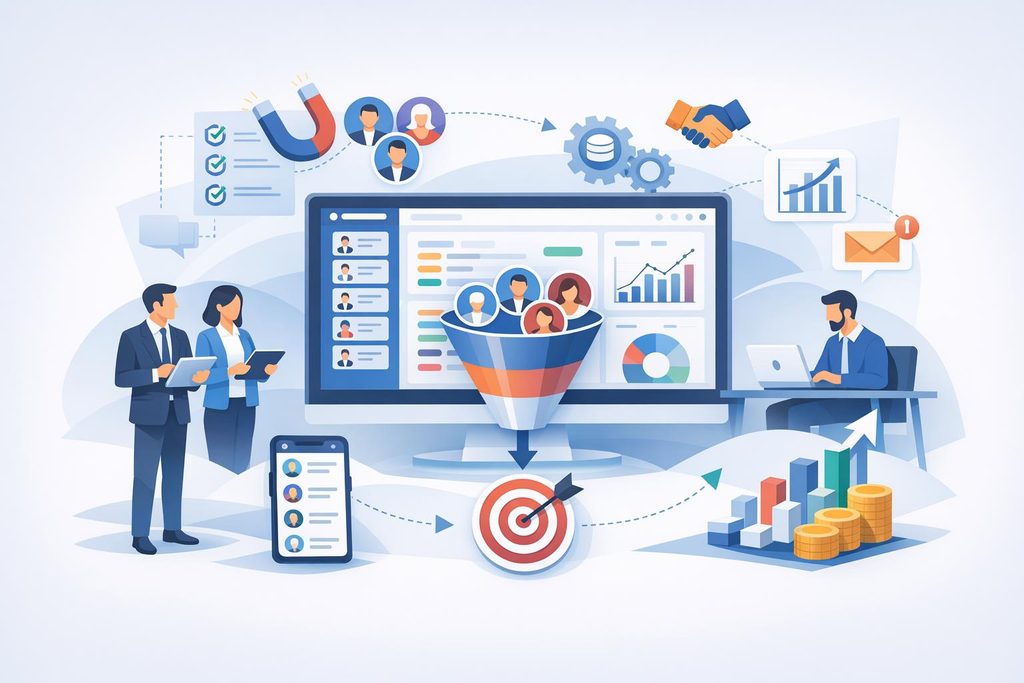
A predictable sales pipeline requires a structured process that connects prospect research, outreach, engagement, qualification, and sales follow-up.
Businesses should approach lead generation as an ongoing revenue development process rather than a one-time marketing activity.
Here is a practical framework.
Step 1: Define Your Target Market
Identify the industries, company sizes, locations, and business types that align with your offering.
Establish clear qualification criteria before beginning prospect research.
Step 2: Build and Verify Your Prospect Database
Research relevant organizations and identify appropriate decision-makers.
Enrich your database with accurate company and contact information, and verify business email addresses before launching outreach campaigns.
Step 3: Develop Relevant Messaging
Create outreach messaging that addresses the specific needs of your target audience.
Different industries and decision-makers may require different messaging approaches.
Step 4: Launch Targeted Outreach Campaigns
Use a combination of personalized email, LinkedIn engagement, and relevant content to reach potential customers.
Monitor campaign performance and make adjustments based on actual engagement and feedback.
Step 5: Qualify and Schedule Meetings
Identify prospects who demonstrate genuine interest and match your qualification requirements.
Coordinate meeting scheduling and ensure the sales team receives the necessary background information before each conversation.
Step 6: Track, Analyze, and Optimize
Regularly review performance data to understand which industries, messages, and targeting strategies are generating the strongest opportunities.
Use these insights to continuously improve your sales pipeline.
8. How Mfinity Helps Businesses Generate Qualified B2B Opportunities
Building a consistent B2B sales pipeline requires time, research, the right technology, and a structured outreach strategy.
This is where Mfinity helps businesses strengthen their customer acquisition efforts.
Mfinity focuses on B2B appointment generation and lead generation solutions that help businesses connect with relevant decision-makers and create more opportunities for meaningful sales conversations.
Our approach combines targeted prospect research, data-driven audience selection, personalized outreach, and structured campaign execution.
B2B Appointment Generation
We help businesses connect with relevant prospects and generate opportunities for qualified sales conversations.
Targeted Lead List Building
We help identify companies and decision-makers based on specific industry, company size, geographic, and other ideal customer profile requirements.
Personalized Email Outreach
We develop targeted outreach campaigns designed to communicate business value and initiate relevant conversations with potential customers.
Account-Based Marketing Support
We help businesses focus their prospecting efforts on selected companies and relevant decision-makers through targeted account research and outreach.
Our objective is to help businesses move beyond simply collecting contacts and focus on creating meaningful B2B sales opportunities.
Whether you are looking to expand into new markets, reach decision-makers, or establish a more consistent appointment generation process, having the right lead generation strategy can make a meaningful difference.
Conclusion: Building a Smarter B2B Lead Generation Strategy
The future of B2B lead generation is not about sending more emails, collecting larger contact lists, or adopting every new marketing technology.
It is about combining the right data, intelligent targeting, meaningful personalization, and consistent communication to reach the right decision-makers.
AI is making it easier for businesses to research prospects, understand customer needs, and improve sales productivity. However, technology alone cannot replace the importance of understanding buyers, communicating genuine value, and building trusted business relationships.
Businesses that combine AI-powered insights with human expertise and a well-defined outreach strategy will be better positioned to develop stronger sales pipelines and create sustainable growth.
The opportunity in 2026 is clear: Focus on the right prospects, deliver relevant communication, and turn meaningful engagement into qualified business opportunities.
Looking to Generate More Qualified B2B Sales Opportunities?
Building a consistent sales pipeline starts with reaching the right decision-makers.
At Mfinity, we help businesses strengthen their B2B lead generation and appointment generation efforts through targeted prospect research and personalized outreach strategies.
Let’s explore how we can help your business generate more qualified opportunities.
Visit Mfinity at https://themfinity.com/ to learn more about our services and get in touch with our team.